Wednesday, October 5, 2011

31 for 21: Thankful Thursday Give Away

Happy Thursday everyone!  It has been a while since I did a Thankful Thursday in blogland and it let me tell you that it is long over due.

This is Ellie's favorite book:


It describes perfectly what (or who) I am thankful for today:


I Love You Through and Through
by Bernadette Rossett-Shustak
Illustrated by Caroline Jayne Church
(2005) Scholastic Books.

I love you through and through.


I love your top side. 
I love your bottom side.


I love your inside, 
and outside.


I love your happy side,
your sad side,
your silly side,
your mad side.


I love your fingers
and toes, 
your ears
and nose.


I love your hair and eyes,
your giggles
and cries. 


I love you running
and walking, 
silent (she is never silent)
and talking.


I love your through and through . . . 
. . . yesterday, today, and tomorrow too.


Because I love this book and because I love comments :), one Chronicles of EBB reader will receive a copy of this fabulous kid's book.  Tell me your favorite book or children's book in the comments and the winner will be drawn on 10/31/11.

Happy Reading!


Photobucket

Petechiae

*I apologize in advance for some missing photos - I used Photobucket for free as a means to store my photos and they are now holding a few hundred pics of mine for hostage unless I pay for an expensive plan.*

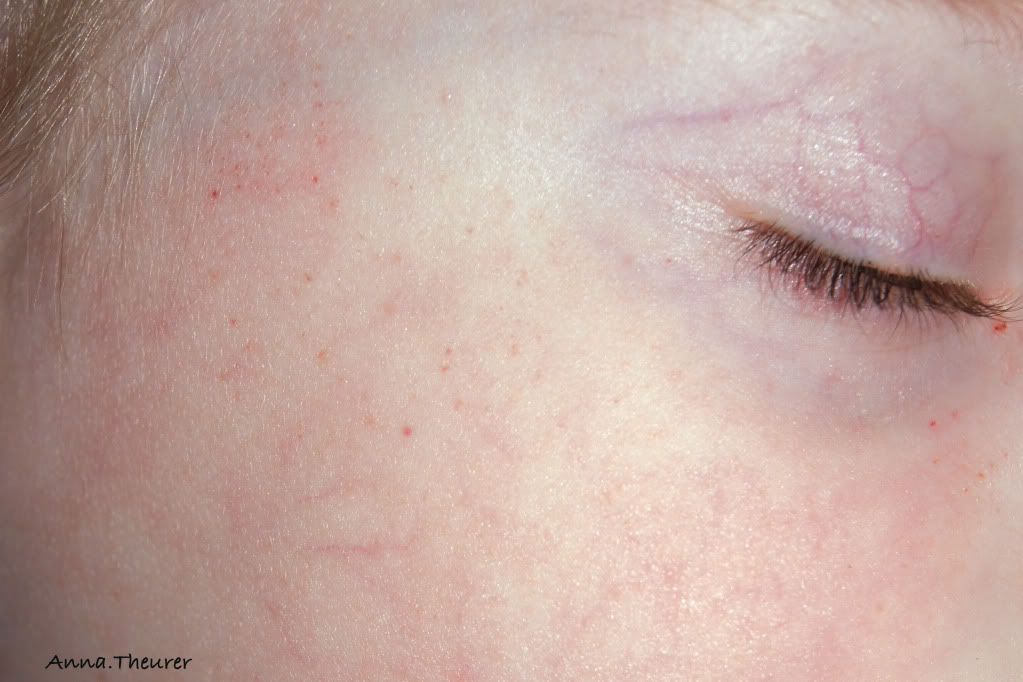
This is what petechiae looks like:

update 2014: petechiae from screaming
Note the bright red "freckling" around her eyes and across her cheeks.  These are "popped" blood vessels (capillaries) that appeared while Ellie was screaming during an ENT visit.


What exactly is petechiae and how did little Miss Ellie Bellie Bear come to have petechiae on her wee little face?

Definition: 
petechiae appears as small, red/purple/brown, pin-point dots on the skin as a result of bleeding from capillaries (tiny little blood vessels) under the skin's surface.  To differentiate between a rash and petechiae, the rash disappears when pressed on while petechiae remains.

Petechiae on the ear lobe from sleeping on it funny.

Why are so many of us in the Down syndrome community freaked out by rashes that could possibly be petechiae?

One word: CANCER or more specifically - LEUKEMIA

Children with Down syndrome are at a greater risk for leukemia--as in 20 times higher than the general 46-chromosomed population . Those who carry that extra 21st chromosome are at a greater risk for acute lymphoblastic leukemia (ALL) and acute myeloid leukemia (AML) with most cases of AML developing before the age of 5.  It is why our children must have routine CBC (complete blood count) labs drawn at well-child visits.

Sometimes, petechiae is sign of leukemia in our children because it suggests poor clotting.  The capillaries burst and leak into the surround skin, thus causing those pin-point dots.   Poor clotting can be the result of impaired platelet function (a component of our blood that works in clotting).  The nasty abnormal cancer cells start to crowd out the normal blood cells which include platelets.

Decreased platelets =  decreased clotting function  = bleeding under skin = petechiae

DO NOT PANIC!

Petechiae can be the result of so many things--not just cancer.  See Toddler Bear above--screaming popped some of those delicate little capillaries around her eyes.  Forceful vomiting can do the same thing.


Other causes of petechiae:

  • Forceful coughing 
  • Vomiting
  • Screaming (ie Ellie getting cathed)
  • Medications
  • Infections such as Mononucleosis, Measles, and enterovirus
  • Platelet Disorders
  • Vitamin K deficiency (infants)
Mechanical Trauma:

This is from a tourniquet used in Ellie's most recent blood draw.


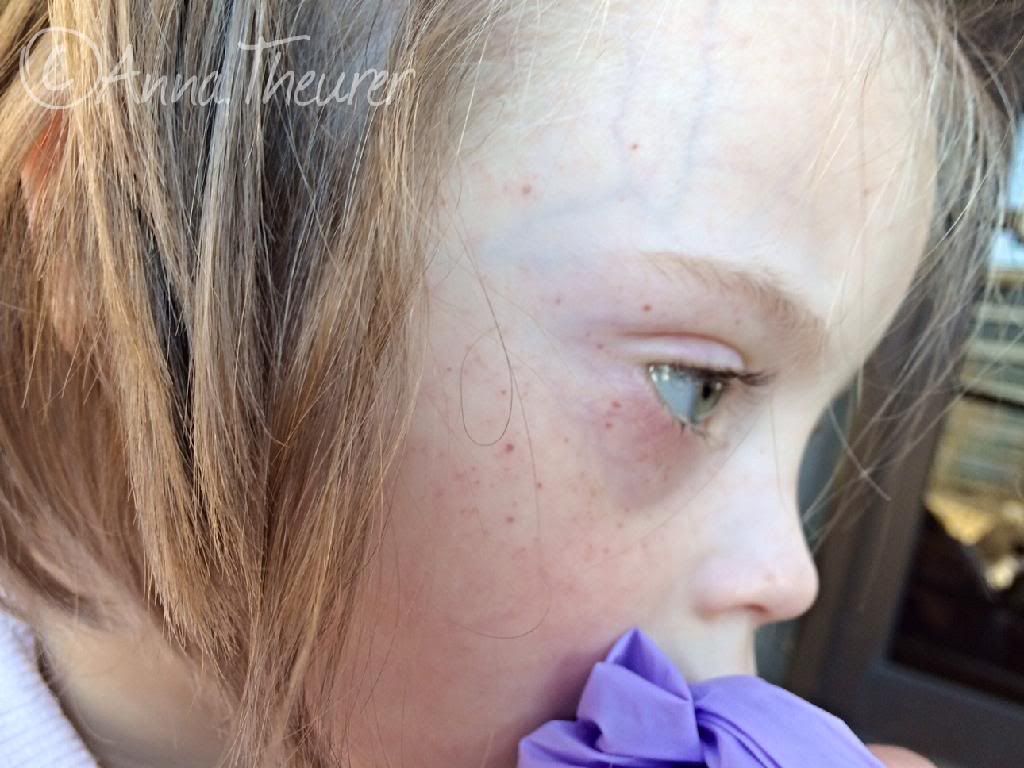
Injury: 

This is the result of a little fall at a playground where she bonked the side of her forehead aka temple.


Infection:

Some viruses such as enterovirus and mononucleosis (the "kissing disease") can cause a petechiae-type rash.

In the bacterial infection of step throat, petechiae may be seen near the tonsils or the roof of the mouth.


Now, I am the paranoid mama bear who sits quaking in my combat boots due to Ellie's propensity to sprout petechiae at any given moment.  Routine CBCs have been normal.  I am slowly starting to calm down and not jump to conclusions every time Ellie Bear gets a patch of petechiae on her face, under her arms, or on her ear lobes of all places.  My daughter is fair-skinned and some of her little capillaries are visible to the naked eye on her cheeks and neck.  Our pediatrician and myself believe that Ellie is just going to be a petechiael kind of girl.  Will we continue to monitor her blood cells?  Absolutely!  Will I panic with each episode?  No.  . . . well, in theory no.  


Photobucket
References:
The Mayo Clinic. Petechiae
National Cancer Institute.  Childhood Acute Lymphoblastic Leukemia.
Cinicnnati Children's Hospital Heart-Related Syndromes: Down Syndrome (T21)

Monday, October 3, 2011

31 for 21: The Karotype Genetic vs. Hereditary

Back when I first starting writing, my blog was private and read a bit like a research paper.  Yes, it was the nurse practitioner in me coming out!  Today, I would like to go back to the basics and recap some of what I wrote with regards to what exactly Down syndrome is.  Surprisingly, most people do not know a whole lot about Ds and I hope to change that. (If you want to read my so-called research paper on Ds, you can do so here.)

No fear, I will end this post with tons of Ellie Bear pics. . .to show that we are all more alike than different.

Down syndrome is genetic disorder characterized by the possession of 3 copies of the 21st chromosome.

What does that mean?

Genetic means a mutation of the genes.  Everyone has genes.  Twenty-three chromosomes from mom and 23 from dad.  This equals 46 chromosomes total.  There are three types of Down syndrome and the most common form of Ds (Ellie's form) results in an extra chromosome.  This means my daughter has 47 chromosomes rather than the traditional 46 chromosomes.  Ellie has Trisomy 21.  Tri = 3.  Therefore she has 3 copies of the 21 chromosome.

Down syndrome is not contagious nor can you remove the extra chromosome.  That extra gene material is there for life and it starts in-utero.  It is NOT ANY ONE'S FAULT.  It just happen spontaneously and it happens BEFORE the child is born.  That means she didn't "catch it" after birth or anything along those lines.

A side note on the hereditary part--hereditary means the syndrome is passed down from one family member to the next.  Genetic means there is a change in the genetic material (chromosomes).  Down syndrome for the most part is genetic and NOT hereditary.  My aunt on my father's side as Trisomy 21 aka Down syndrome.  It is just pure coincidence that my daughter has Ds.  Coincidence.  I was at no higher risk of having a child with Ds than the general population for women under 30 years-old.

However, there is one subset or type of Ds that is hereditary and that is Translocation Ds.  Listed below are the 3 types of Ds.

1. Trisomy 21:  This form makes up 95% of DS cases. This is where every single cell has 47 chromosomes with the extra being #21. Trisomy 21 occurs at conception (3). While most of the time it is the egg that might contribute the extra chromosome, it can be the sperm (3). I like to think that Ellie is 51% me and 49% Andrew. That being said, when she is naughty, I might claim she is more Andrew than me. 


Three full copies of the 21st chromosome


2. Translocation:  This is where a piece of the 21st chromosome breaks off and attaches itself to another chromosome.  This is the type of Ds that is thought to be hereditary--as in it can be passed down generation to generation.


This is actually a picture of Translocation 22.  Just imagine that the 21st chromosome is the translocation.


3. Mosaicsim:  This is where some of the cells have 46 chromosomes while others have 47 chromosomes with the 47th being #21. This type is thought to make up 1-2 % cases of Ds.


How is Down syndrome diagnosed?


It is requires the blood of your newborn baby.  Down syndrome is typically suspected either after a prenatal blood test or ultrasound OR just shortly after birth (like Ellie).  A sample of blood is taken from the baby and shipped off to a fancy schmancy lab were a karotype is performed.  Here is Ellie's:


 I wish Ellie's karotype was in color.  Instead, we must settle for the boring black and white photocopied version.


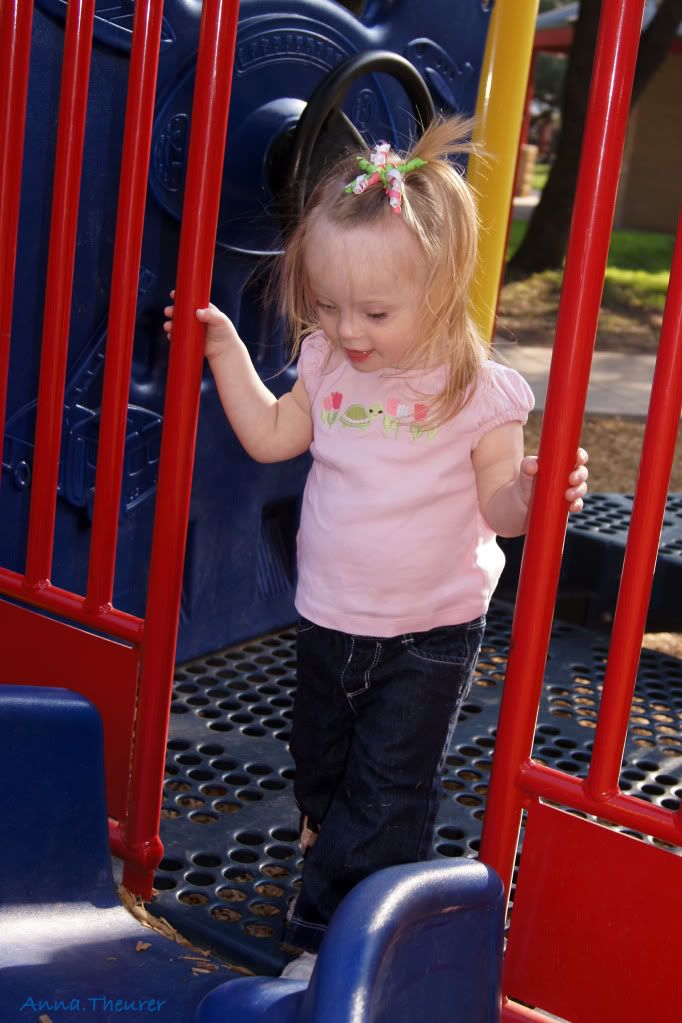
Giddy Up!

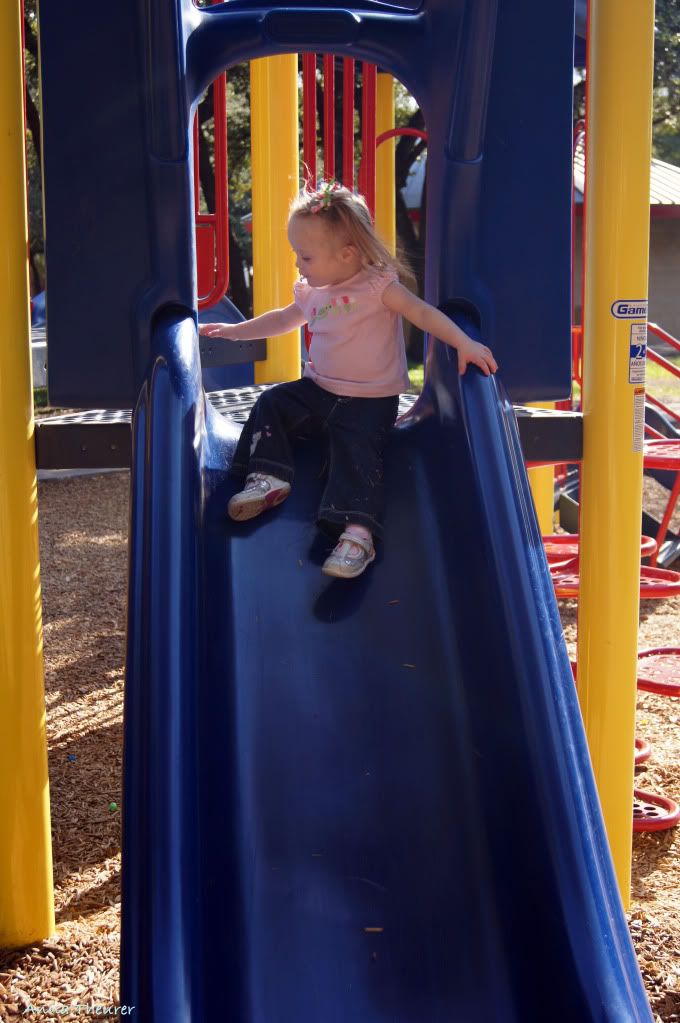
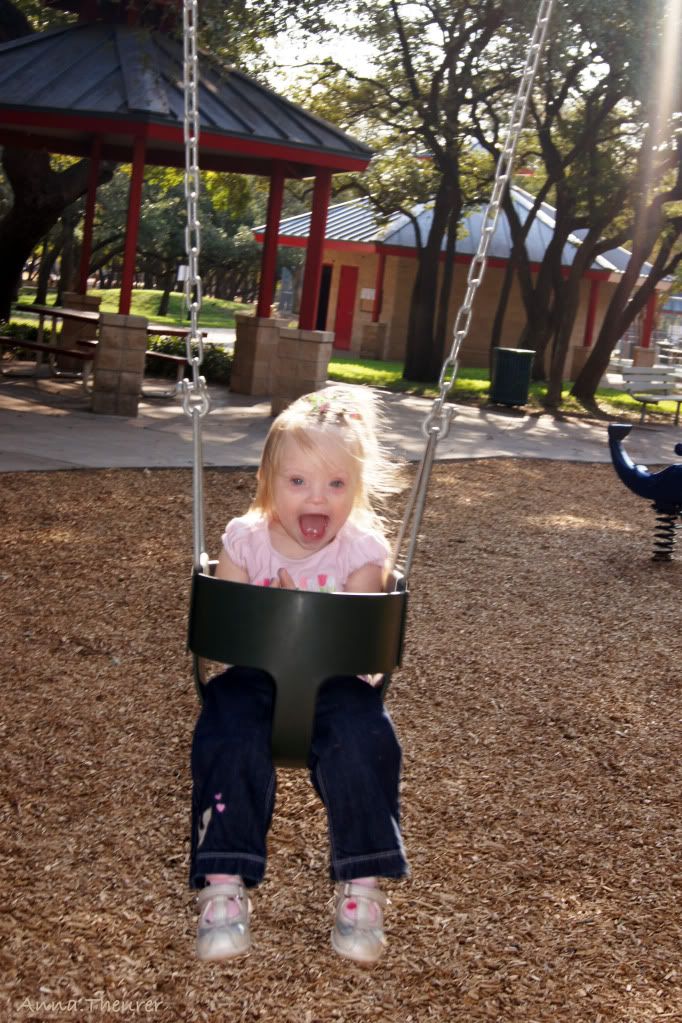
Preparing for her perfect 10 decent down the slide.

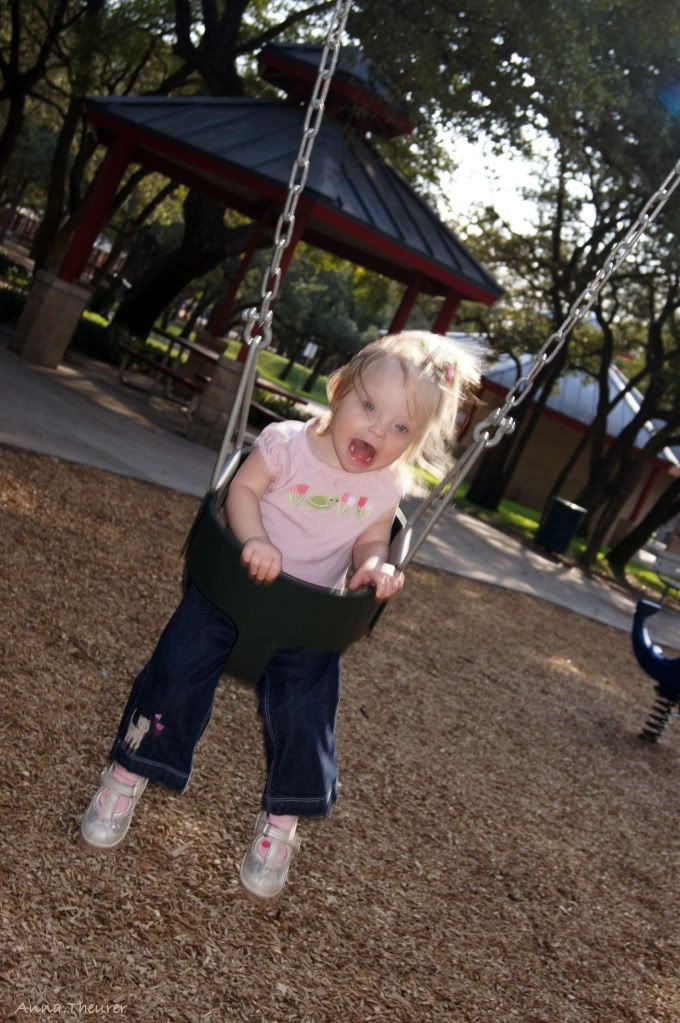
Yippee!  Wee!

She really looks like me here--She is practicing her Axel Rose voice.

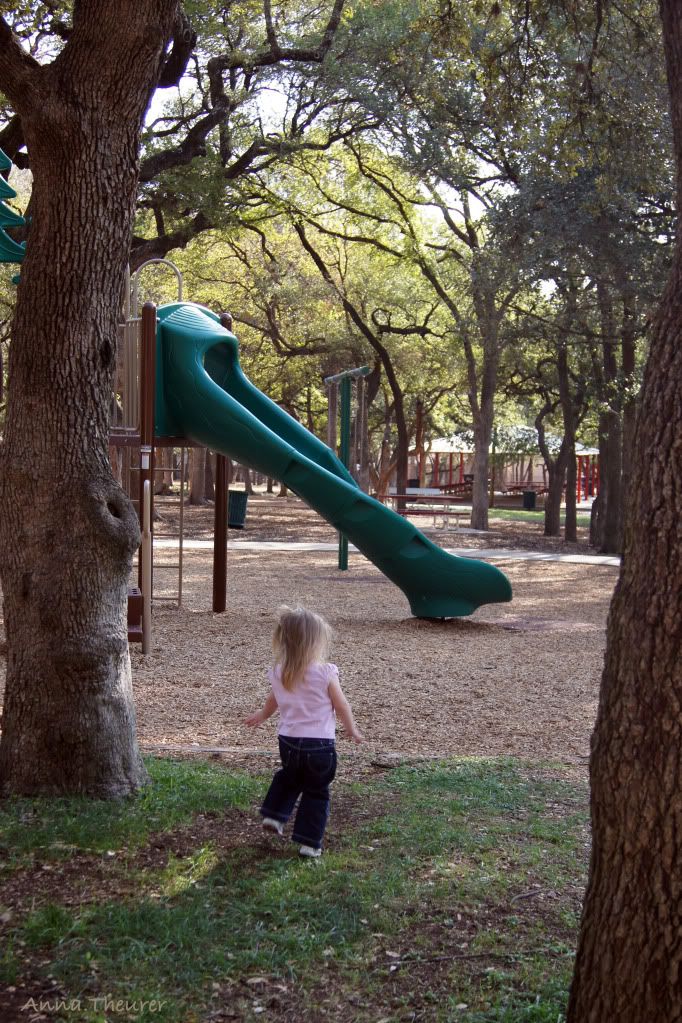
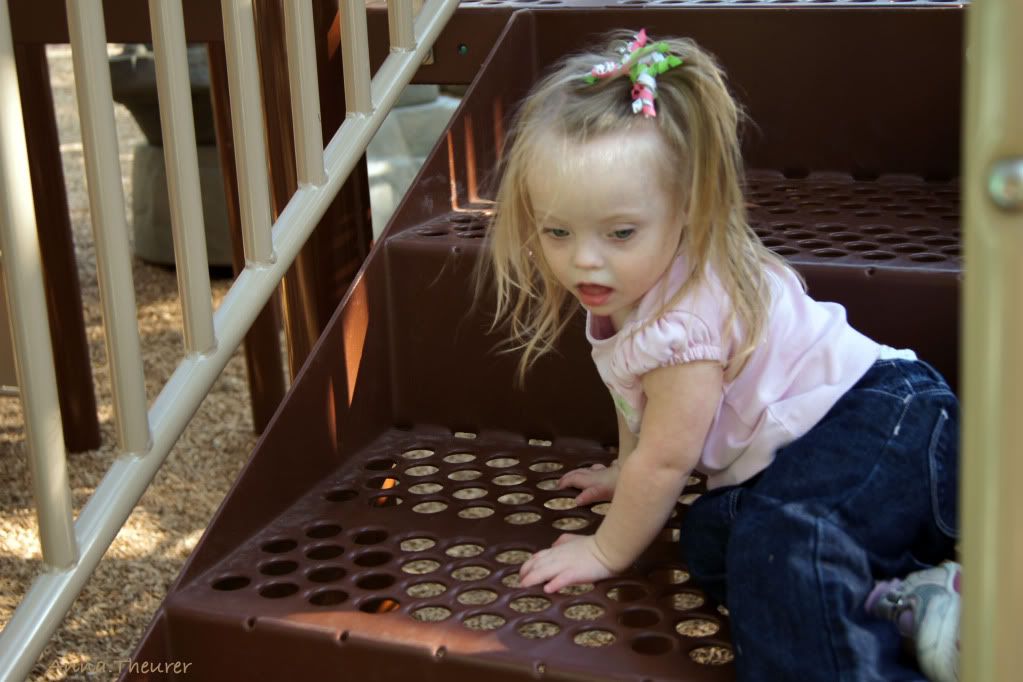
Ta-Ta.  Ellie has some important exploring. Actually she wants to go down the big slide and mama bear is preparing for a heart attack.


Photobucket

Sunday, October 2, 2011

Welcoming "To Love The Unloved"

This guest post is very special and close to my heart.  The writers are three young ladies who come from different parts of the globe-London, The United States, and Australia.  They all share a passion.  A passion for helping those who are deemed as "unlovable".    Their story is living proof that YOU CAN make a difference.  Thank you Taylah, Sunny, and Savana for sharing your vision on The Chronicles of EBB.  

Please read more to learn about "To Love The Unloved"!!!!!


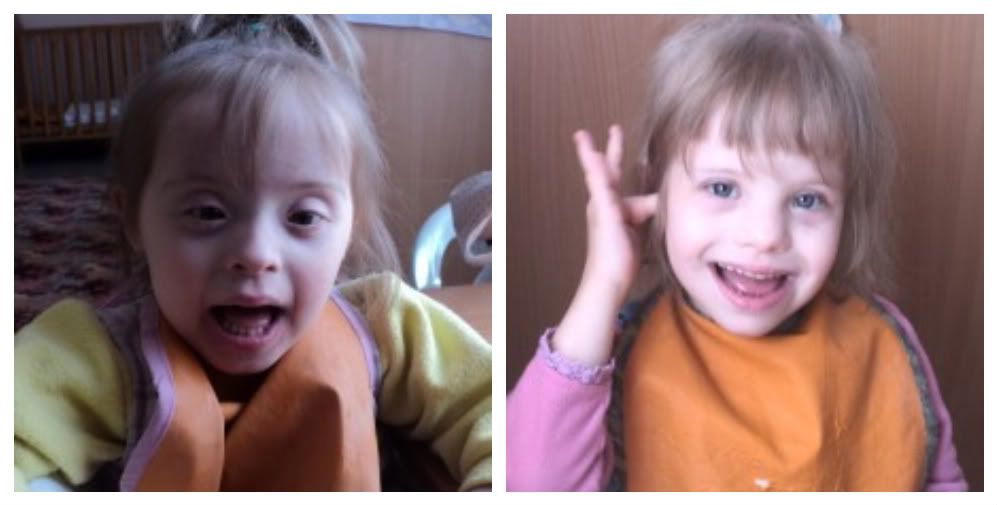
Ellie is begging me to share their story:


Have you ever felt the disire to do something that is going to effect a whole lot of people?
The thought of your life making a difference to so many more....
But then you realise you are just one. You cannot make a difference.

Ellie


We have all had those feeling. It is how you chose to take those feelings and act, that shapes who you are, and your purpose in this world.

Artem K.--Already transferred!


We are just three teenage girls.
We have a passion.
We have a love.
We have a hope.
We have a vision.
And, we have chosen to act.

Tabitha
 

Sunny is 20. She has a 19 year old brother who has Down syndrome. She lives in London.
Savana is 20. She has a 3 year old sister who has Down syndrome. She lives in America.
I, Taylah, and 16. I have a 3 year old cousin who has Down syndrome. I live in Australia.

Each of us have an intense love for someone with Down syndrome. We see them in a way most of the world chooses not too.

Daniel 2H


Did you know that 90% of babies with Down syndrome are aborted before they get to enter this world? 
9 out of 10! Their lives are taken because they have a disability. It just doesn't seem right, does it?

Did you know that in Eastern Europe, children with disabilities, such as Down syndrome, are left orphaned at birth.
They live in an orphanage until they are 5 years old.
Once they turn 5 they are placed in an adults mental institution where conditions are so horrible most don't survive a year in there.
With adoption costing over $30,000 it is likely that most of these children will never see outside the walls of a crib.

When we were given the facts, we decided that it was too devastating to just sit back. We decided to ACT!


Elden


'To love the unloved' was founded in December, 2010.
Since then, we have helped fund the adoption of 12 precious children!

Victoria

Each month we host giveaways for a child or family from Reece's Rainbow (an adoption ministry that helps find homes for orphans with Down syndrome) on our blog!

Jaxon
There are so many ways that you can help 'To love the unloved' out! 
First, you can give a donation and enter the give away!
Secondly, you can drop by and leave a message of encouragement and support!
Finally, please keep us, and these precious babies in your thoughts and prayers! 


Sasha-SIGNIFICANT RISK!

October is Down syndrome awareness month! 
A month were we show the world what valuable treasures these children are! 
In honour of Down syndrome awareness month, will you consider dropping by and helping save the life of an orphan with Down syndrome? 


Bridget


Thank you so much!

Love,
Tay, Savana and Sunny!

Sharing Sundays

I am happy to announce that The Chronicles of Ellie Bellie Bear will be apart of the Sharing Sundays blog hop.  This blog hop features families that are currently fundraising.  I know that posted some links on the Forget-Me-Not Friday hop, but today I will be sure to include photos.  After all, it is good to see just who you are helping :)

On a sad note, many of the blogs I used to share with you are no longer visible to the public.  Recently, there has been an onslaught of people making horrible comments about these families rescuing and adopting these children who are deemed as "less than worthy" over in E.E.  These comments are coming from North America and it is upsetting that so many people are not practicing acceptance.  It makes me believe that we are no better than these E.E.  True, we are not shoving our children into orphanages, but the discrimination is still running rampant and that saddens me deeply.

The links below are blogs that are still open to the public.  There are so many more that need help.

Sharing Sunday:

Photobucket


Olga

The Abell Family is still working very hard to get sweet Olga home.


Albina


Albina's Family still needs funds to bring her home to her forever family.


Shawna and Lindsey


The Eubanks family still need significant funds to bring home Shawna and Lindsey.  There dossier has just been submitted and they are desperate for funds as they will receive their travel date soon!


Shannon


The Sphak family is still selling "orphan bracelets" to raise money for the adoption of Shannon.  Shannon is in an institution right now because she is "too old" for the baby house  / orphanage.  Significant funds are needed and this family has had a hard time raising money through fundraising.


Saturday, October 1, 2011

31 for 21: Subnormal, Mentally R*tarded-the Use of Demeaning Labels

Below is an article on the inappropriate use of derogatory labels in Malaysia.  The thing is, the United States is no better.  This is a global problem.  Read on!


DEMEANING LABLES by Dr. Leon Chin in The Sun Daily
September 14, 2011
THE Malaysia I knew when I left for the United Kingdom in 1973 and the Malaysia now looked very different. Today, the impressive Petronas Twin Towers in Kuala Lumpur seem to symbolise the transformation of Malaysia into a modern country.
And with its 21st century urban landscape consisting of skyscrapers, modern architecture and vast infrastructure, Malaysia has surely come of age.
Certain things, however, have remained more or less the same. For instance, in my hometown Penang, the food dished out by the hawkers remain unbeatable, and old and tired-looking rickshaws still ply the roads. And many of the old town heritage houses in Georgetown are still standing.
But one thing seems trapped in a time warp. By chance, I happened to notice a signboard next to the entrance to a white building which read School for the Mentally Retarded Children.
I was rather bemused by it but, at the same time, saddened. Sad because even in this day and age, such derogatory labels are used to describe children with intellectual or learning disabilities.
Even sadder, it appears that this demeaning label is used not only by this school. I conducted an internet research and came to realise that similar awful labels such as ‘mentally handicapped’ and ‘mentally challenged’ are also used in other parts of the country by various schools and organisations working with children and adults with intellectual disabilities.
Labels like mentally retarded and mentally handicapped are by any stretch of imagination humiliating as these labels are frequently employed as terms of abuse and ridicule.
Labelling children and adults with intellectual disabilities with such terms only serves to reinforce society’s ignorance, prejudices and discrimination against them, and one such consequence is bullying or name-calling by other children.
These labels stigmatise them as social outcasts and therefore set them apart from their fellow citizens. Moreover, this social rejection may erode their self-belief, self-esteem and self-worth which can affect their psychological and emotional health resulting in behavioural problems.
Unlike product branding, putting labels on people is insidious and affects other vulnerable groups of people, such as people with mental health problems.
This is why mental illness labels such as ‘schizophrenia’ are often far worse than the illness itself because of the fear and prejudice it creates in the public mind.
More importantly, most members of the public are not able to tell the difference between ‘mental retardation’ and ‘mental illness’.
Consequently, because ‘mentally (retarded)’ is a rather conspicuous word, people may immediately – and wrongly I might add – assume that children with such a condition are ‘gila’ (mad).
In actual fact, it is a misnomer to associate people with intellectual disabilities with any form of mental illness.
Intellectual disability is neither a mental nor a physical illness. But, like any of us, they can be susceptible to both illnesses.
Learning disabilities are related to a person’s ‘intellectual’ (IQ) rather than a ‘mental’ (psychological) impairment due to brain injury at an early age or at birth.
Therefore, due to their intellectual and cognitive defects, many of them are unable to master simple household chores, self-help skills, social skills, inter-personal skills, communication skills or solve simple problems.
The majority of them are unable to live independently as a result of their intellectual disabilities and not because they are mentally ill.
Educational authorities have a duty not only to educate their pupils and students, but they also have a wider social responsibility in terms of challenging society’s prejudices and discriminations by means of social discourse and learning.
In this instance, how can the teachers and other professionals working with people with learning disabilities have any moral authority to stop members of the public from referring to their pupils or charge as mentally retarded or mentally handicapped if their respective schools or organisations use these same labels?
They are, in fact, sending out the wrong message.
At this point, I would like to add that I have since had conversations with some of the professionals and fundraisers supporting this group of people. They too would like to do away with these demeaning labels.
However, because mentally retarded and mentally handicapped are “official titles”, it would require the government to sanction changes to these titles.
It took the UK more than 50 years to change ‘imbecile’ to ‘idiot’; and ‘mentally subnormal’, ‘mentally retarded’, ‘mentally handicapped’ to finally ‘learning disability’.
But then, we are living in the 21st century and if Malaysia is progressive enough to transform into a modern state, she is equally capable of modernising her social attitude too.
Dr Chin Chiow Leon is a National Health Service (NHS) practitioner providing treatment for people with complex mental health needs and forensic behavioural problems. He’s also a member of the NHS Clinical Governance Committee and a visiting senior lecturer. Readers with queries can write to him at psychology@thesundaily.com.


Do you want to make a difference?  Are you angered by the use of discriminatory language in the media and general population?  Consider joining Stop Disability Slurs on Facebook.   To learn more or on how to become an advocate, visit our facebook page listed below or email stopdisabilityslurs@gmail.com


Disclaimer: I am the co-founder.  Still, you really should join because united together under a common cause, we can make a difference and we already have!

Photobucket

Raising Awareness: 31 for 21

Every year, the month of October is known to those of us "in the club" as Down Syndrome Awareness Month.

What does that mean?  It means we are celebrating life with Ds!  Thirty-One is for the number of days in October and Twenty One is because people with Down syndrome have 3 copies of the 21st chromosome.  It also means that you are going to be seeing a lot of bloggers posting for 31 straight days.  That is a lot of writing and a lot of reading.

Join me in 31 for 21.  If you have any questions about Ds, feel free to email me or leave a comment.  Happy Down Syndrome Awareness Month!


Future posts will discuss the history of Down syndrome, Fun-Facts,  Ds health and other related issues, inspiring stories, and suggestions from The Chronicles of EBB readers.

Fun Fact:  March 21, 2006 marks the very first World Down Syndrome Day.  

Photobucket

Cecostomy Tubes R Us

Here we are - two posts in 30 days! It's scandalous, I tell you!  Seriously though, I bet you all thought that I abandoned ship and woul...